Table of Contents
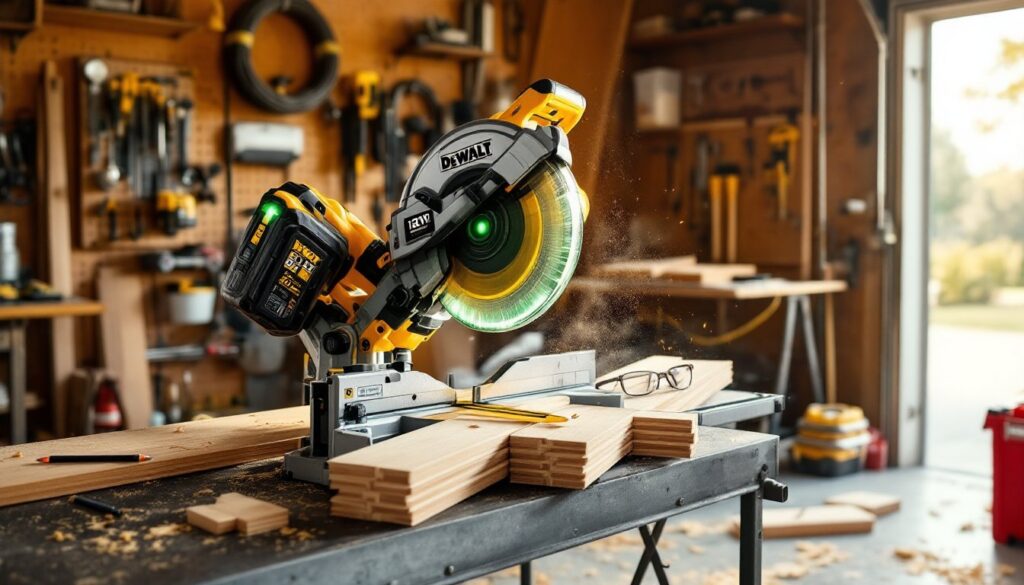
ToggleCordless technology has changed the game for finish carpenters, remodelers, and weekend warriors alike. DeWalt’s cordless miter saws bring job-site mobility and workshop precision together without the hassle of extension cords or generator hum. Whether framing out a deck, installing crown molding, or building furniture, a battery-powered miter saw lets DIYers work anywhere, basement, attic, or backyard, with the same cutting accuracy they’d expect from a corded model. DeWalt’s lineup stands out for reliable battery systems, solid build quality, and features that matter when you’re halfway through a stack of trim and need consistent, repeatable cuts.
Key Takeaways
- A DeWalt cordless miter saw eliminates extension cords and generators while maintaining workshop-grade cutting accuracy for trim carpentry, decking, and furniture projects across multiple locations.
- Battery interchangeability across DeWalt’s 20V MAX and FlexVolt platforms reduces upfront costs if you already own compatible batteries and chargers for other tools.
- The DHS790 12-inch dual-bevel sliding model offers maximum power for crown molding and framing, while lighter 7¼-inch models prioritize portability for finish carpenters moving between rooms.
- Dual-bevel capability eliminates workpiece flipping for compound angle cuts, while sliding rails extend cutting capacity for wider boards—both critical features for professional trim work.
- FlexVolt 12.0Ah batteries deliver 250–300 cuts per charge in 2×4 pine; invest in two high-capacity batteries and a dual-port charger to maintain continuous workflow without downtime.
- Regular maintenance—checking blade sharpness, calibrating miter and bevel scales, cleaning sliding rails, and storing batteries at 40–60% charge—extends tool life and ensures precision for every cut.
Why Choose a DeWalt Cordless Miter Saw for Your Home Projects
DeWalt built its reputation on durability and compatibility across its 20V MAX and FlexVolt battery platforms. A cordless miter saw from DeWalt means you’re not locked into a single tool ecosystem, the same batteries power drills, impact drivers, circular saws, and more. That interchangeability cuts upfront costs if you already own DeWalt batteries and chargers.
Portability is the headline advantage. Set up in a garage, carry the saw upstairs for baseboard installation, or take it to a remote shed without hunting for outlets. No cord also means no tripping hazard and faster teardown when the project wraps.
Cutting performance rivals corded models for most residential tasks. DeWalt’s brushless motors deliver enough torque to slice through 2×10 Douglas fir framing lumber and hardwood trim without bogging down, provided the battery is charged and sharp blades are installed. For trim carpentry, baseboards, door casings, picture rail, a cordless miter saw handles repetitive crosscuts and miters all day on a pair of high-capacity batteries.
Battery-powered saws do have limits. Extended ripping, cutting pressure-treated lumber repeatedly, or working with dense exotics like ipe can drain batteries faster. Keep a second battery on the charger, and you’ll rarely notice downtime.
Top DeWalt Cordless Miter Saw Models Compared
DeWalt offers several cordless miter saw configurations. Understanding the differences helps match the saw to your project scope and budget.
DHS790 (FlexVolt 12-inch dual-bevel sliding): This is DeWalt’s flagship cordless model. The 60V FlexVolt battery system delivers maximum power and runtime. Dual-bevel capability (tilts left and right) speeds compound cuts for crown molding. The 12-inch blade crosscuts up to 2×14 lumber at 90 degrees and handles 2×10 stock at 45-degree miters. Sliding rails extend cutting capacity for wider boards. Weight is around 56 pounds with battery, so it’s not a grab-and-go saw, but the performance justifies the heft for serious trim work and framing.
DCS361 (20V MAX 7¼-inch single-bevel sliding): A compact, lighter option at roughly 30 pounds with battery. The 7¼-inch blade crosscuts 2×8 dimensional lumber at 90 degrees. Single-bevel means the saw tilts only to the left: compound cuts for crown require flipping the workpiece. It’s ideal for smaller trim projects, closet build-outs, and jobs where you’re moving the saw frequently. Battery runtime is shorter than FlexVolt models, but the portability trade-off makes sense for finish carpenters working across multiple rooms.
DCS369 (20V MAX 7¼-inch cordless miter saw, non-sliding): The most portable model in the lineup. Non-sliding design reduces footprint and weight. Crosscut capacity is limited to narrower stock, around 3½ inches vertically at 90 degrees. Best suited for cutting trim, small project lumber, and applications where space is tight and the saw needs to pack in and out quickly. Many homeowners find this sufficient for baseboard, window trim, and light DIY framing.
Key Features to Look for in a DeWalt Cordless Miter Saw
Choosing the right model means evaluating features that affect precision, safety, and ease of use.
Blade size and cutting capacity: Larger blades (12-inch) cut deeper and wider stock. If you’re installing crown molding, trimming stair stringers, or cutting deck joists, a 12-inch saw handles the span. Smaller 7¼-inch models work well for baseboard, door casing, and furniture parts where material thickness rarely exceeds 2 inches.
Single-bevel vs. dual-bevel: Dual-bevel saws tilt both left and right, eliminating the need to flip workpieces when cutting compound angles. Crown molding installers save considerable time. Single-bevel saws tilt one direction only: you’ll rotate boards for opposite-side bevels. It’s a workflow consideration more than a deal-breaker.
Sliding vs. non-sliding: Sliding miter saws extend cutting capacity for wider boards. A non-sliding 12-inch saw might crosscut a 2×8: a sliding version handles 2×12 or wider. Sliding rails add weight and depth, so consider your workbench space and portability needs. According to testing by home improvement experts, sliding saws offer measurably greater versatility for varied project types.
Fence design and adjustment: A tall, sturdy fence supports crown molding in the nested position and keeps boards square during cuts. Look for fences that slide left and right to accommodate bevel cuts without removing the fence entirely. DeWalt models typically feature adjustable fences with positive stops at common angles.
Dust collection: Miter saws produce mountains of sawdust. DeWalt cordless models include a dust port compatible with standard shop vacuum hoses (usually 1¼-inch or adaptable). Some models have an integrated dust bag, but a vacuum attachment captures 80–90% of debris and keeps the work area cleaner.
LED work lights and laser guides: Built-in LED lights illuminate the cut line in dim spaces. Some models include laser guides or LED shadow lines that project the blade path onto the workpiece. These features improve accuracy, especially for beginners learning to align cuts visually.
Battery Performance and Runtime
Battery capacity directly impacts how many cuts you’ll complete between charges. DeWalt’s FlexVolt 60V batteries (rated at 9.0Ah or 12.0Ah) provide the longest runtime and maintain power under heavy loads. A 12.0Ah FlexVolt battery can deliver 250–300 cuts through 2×4 pine on a full charge, depending on blade sharpness and motor efficiency.
20V MAX batteries come in capacities from 2.0Ah to 5.0Ah. A 5.0Ah battery yields roughly 150–200 cuts in similar material. Smaller batteries reduce saw weight but require more frequent swaps. Invest in at least two high-capacity batteries and a dual-port charger to maintain continuous workflow.
Brushless motors extend battery life by reducing friction and heat. All current DeWalt cordless miter saws use brushless technology, which also increases motor longevity and torque. Cold weather affects lithium-ion performance: batteries drain faster below 40°F, so store them indoors overnight during winter projects.
Best Projects and Applications for Your DeWalt Cordless Miter Saw
Cordless miter saws shine in situations where mobility, speed, and precision intersect.
Trim carpentry and molding installation: Baseboard, crown molding, door and window casing, chair rail, these are the bread-and-butter applications. Cordless saws let installers set up in hallways, bedrooms, or attics without running extension cords through finished spaces. Dual-bevel models cut compound miters for crown without flipping boards, reducing setup time.
Deck and fence building: Cutting deck boards, balusters, and fence pickets on-site speeds installation. A cordless saw sets up on sawhorses near the work area, eliminating trips back to the workshop. Pressure-treated lumber and cedar cut cleanly with a sharp carbide blade. For structural cuts, joists, beams, posts, verify the saw’s crosscut capacity matches your lumber dimensions.
Furniture and cabinet projects: Picture frames, shelving, small furniture assemblies, and cabinet face frames all require precise miters and crosscuts. A cordless saw works well in a garage shop where outlet placement is inconvenient. The portability also allows moving the saw outdoors for finishing cuts in good weather.
Flooring transitions and thresholds: Cutting hardwood, laminate, or engineered flooring at doorways and transitions requires clean, square cuts. A cordless miter saw with a fine-tooth blade makes quick work of these small, precise cuts without dragging out a table saw.
Framing and rough carpentry: While circular saws dominate framing crews, a cordless miter saw handles repetitive cuts for wall studs, blocking, and truss components. The saw’s accuracy reduces material waste and speeds assembly. For anything beyond light framing, a corded saw or a larger FlexVolt model is a better fit due to sustained power demands.
Essential Tips for Using and Maintaining Your Cordless Miter Saw
Getting the most from a cordless miter saw involves setup, blade care, and consistent safety habits.
Secure the saw to a stable surface. Use mounting holes to bolt the saw to a miter saw stand or workbench. Even a 30-pound saw can shift during cuts, throwing off accuracy. Portable stands with quick-release brackets work well for job-site setups.
Always wear safety glasses and hearing protection. Miter saws produce noise levels around 100 dB at the operator’s ear, enough to cause hearing damage with prolonged exposure. Safety glasses protect against flying debris and sawdust. If cutting treated lumber or composite materials, wear a dust mask rated N95 or better.
Check blade sharpness regularly. Dull blades burn wood, produce tear-out, and drain batteries faster. Carbide-tipped blades for general crosscutting last 50–100 hours of use before needing sharpening or replacement. Keep a dedicated fine-tooth blade (60–80 teeth) for molding and trim, and a general-purpose blade (40–50 teeth) for framing lumber.
Calibrate the saw periodically. Miter and bevel scales can drift with heavy use or if the saw takes a knock during transport. Use a combination square to verify the blade is 90 degrees to the fence and table. Adjust the bevel and miter stops per the owner’s manual. Professionals from trusted home improvement sources recommend calibration checks every few months or after moving the saw between job sites.
Clean sawdust from the motor housing and sliding rails. Sawdust buildup clogs cooling vents and binds sliding mechanisms. After each project, blow out the saw with compressed air or a shop vacuum. Wipe down rails with a dry cloth and apply a light coat of dry lubricant if the slide feels sticky.
Store batteries properly. Lithium-ion batteries last longest when stored at 40–60% charge in a cool, dry location. Avoid leaving batteries on the charger indefinitely or storing them fully discharged. Temperature extremes, below freezing or above 120°F, shorten battery lifespan.
Use proper cutting technique. Let the blade reach full speed before starting the cut. Apply steady, controlled pressure: forcing the blade causes binding, motor strain, and poor cut quality. Support long workpieces with roller stands or extension wings to prevent tipping and pinching the blade.
Keep the work area organized. Sawdust, offcuts, and clutter increase trip hazards and distract from safe operation. Clear scraps after every few cuts and maintain a defined space for finished pieces. According to guidance from home maintenance experts, an organized workspace significantly reduces DIY accidents.
Conclusion
A DeWalt cordless miter saw delivers workshop-grade cutting accuracy without tethering you to an outlet. Whether tackling trim work, deck projects, or furniture builds, the portability and battery compatibility make it a practical addition to any DIYer’s tool lineup. Match the saw size and features to your typical projects, keep batteries charged, and maintain sharp blades, you’ll have clean, repeatable cuts wherever the work takes you.