Table of Contents
ToggleA walk-in shower installation isn’t a weekend DIY project. You’re cutting into existing walls, rerouting plumbing, waterproofing wet zones, and ensuring proper drainage, all of which demand specialized skills and often permits. Hiring the wrong contractor can saddle you with leaks, code violations, and a five-figure repair bill. But finding the right walk-in shower installer near you doesn’t have to feel like a gamble. This guide walks through everything homeowners need to vet contractors, understand costs, spot red flags, and get a professional installation done right the first time.
Key Takeaways
- Walk-in shower installation requires specialized skills across plumbing, waterproofing, tile work, and framing—hiring a professional prevents costly leaks and code violations.
- Verify walk-in shower installers by checking credentials, requesting references, confirming licensing and insurance, and reviewing recent project photos before signing a contract.
- Installation costs range from $3,500 to $10,000 nationally, varying by materials, complexity, and regional labor rates, so always request itemized estimates and compare bids carefully.
- Ask potential installers specific questions about permits, waterproofing systems, substrate preparation, warranties, and payment schedules to ensure professional quality and transparency.
- Red flags to avoid include pressure tactics, cash-only payments, vague quotes, unlicensed operators, and poor communication—these signal unprofessional or potentially fraudulent contractors.
- Local walk-in shower installers with established reputations understand regional building codes, maintain supplier relationships, and provide reliable references from nearby homeowners.
Why Hire a Professional Walk In Shower Installer?
Walk-in shower installation crosses several trades: plumbing, tile work, framing, and waterproofing. A professional installer brings expertise in all four.
Plumbing reroutes often require cutting into studs and joists to reposition drains and supply lines. Mistakes here lead to slow drains, trapped water, and mold behind walls. Licensed plumbers know how to maintain proper slope (typically 1/4 inch per foot for shower drains) and meet IRC plumbing codes.
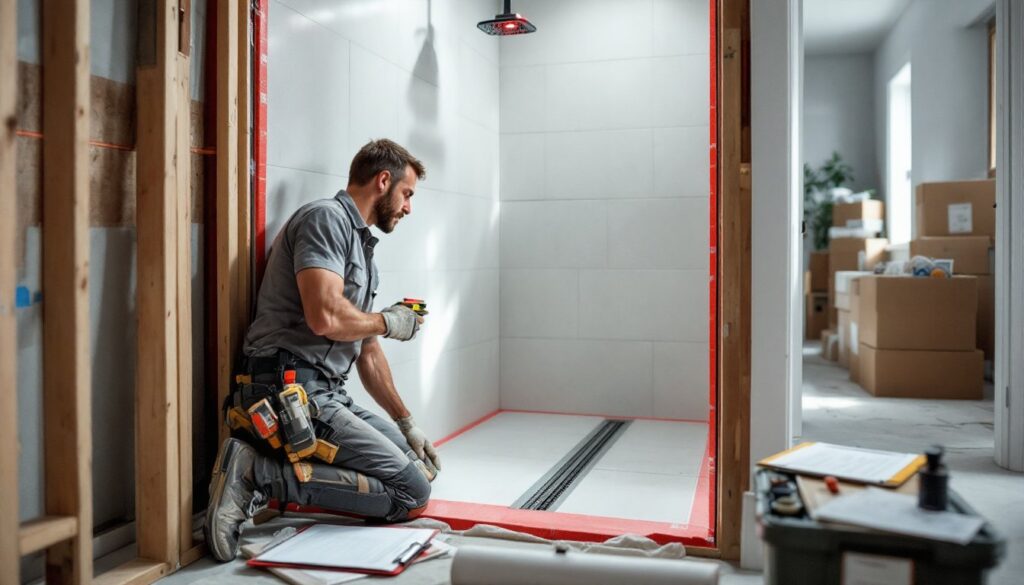
Waterproofing is the difference between a 20-year shower and a two-year disaster. Professionals use RedGard, Schluter Kerdi membranes, or similar products to create watertight barriers on walls and floors before tile goes down. They know to overlap seams, seal penetrations, and flood-test pans before closing walls.
Tile work demands precision. Large-format porcelain tiles, popular in modern walk-in showers, require lippage-free layouts, proper thin-set coverage (90%+ for wet areas), and expansion joints at transitions. Amateurs often skip these steps.
Finally, most jurisdictions require permits for shower installations that involve plumbing or structural changes. Pros pull permits, arrange inspections, and ensure the work meets local building codes. Skipping permits can complicate home sales or insurance claims down the road.
What to Look for When Choosing Local Walk In Shower Installers
Start with verifiable experience. Ask how many walk-in showers the contractor has installed in the past year and request photos of completed jobs. Look for clean grout lines, consistent tile spacing, and flush transitions between surfaces. Generic “bathroom remodel” experience isn’t the same as specialized shower work.
Check references from recent clients. Ask those homeowners if the job stayed on schedule, if the installer communicated changes promptly, and whether any leaks or callbacks occurred after completion.
Local presence matters. Walk-in shower contractors who operate in your area understand regional code requirements, know which inspectors to expect, and have relationships with local suppliers for faster material sourcing. Searching for “walk in shower installers near me” or “walk-in shower installation near me” helps surface nearby pros with local reputations.
Licensing, Insurance, and Certifications
Every walk-in shower installer should carry a valid contractor’s license (requirements vary by state, some require a general contractor license, others a specialized plumbing or remodeling license). Verify the license number through your state’s contractor licensing board.
Liability insurance protects you if the installer damages your home. Request a Certificate of Insurance (COI) showing general liability coverage of at least $1 million. Workers’ compensation insurance is equally important: without it, you could be liable if a worker is injured on your property.
Look for certifications from tile and waterproofing manufacturers. Schluter Systems, TCNA (Tile Council of North America), and NTCA (National Tile Contractors Association) offer training programs. Installers with these credentials have demonstrated knowledge of industry best practices.
How to Find Reputable Walk In Shower Installers in Your Area
Online directories are the fastest starting point. Platforms that connect homeowners with local shower installation pros aggregate reviews, verify licenses, and provide cost estimates. Filter by zip code and read at least five reviews per contractor, focusing on recent feedback.
Houzz is another solid resource, especially if you want to browse portfolios. Many walk in shower installers maintain project galleries there, showing tile choices, glass enclosure styles, and finished layouts. You can message pros directly and request quotes.
Ask your local tile or plumbing supply store for recommendations. Trade suppliers know which contractors buy quality materials, pay on time, and return for repeat business, all signs of a stable, professional operation.
Word-of-mouth referrals from neighbors or friends who’ve recently remodeled bathrooms can surface trustworthy names. Just verify that the work matches your project scope: a contractor skilled in tub-to-shower conversions may not have experience with custom curbless showers.
Finally, check Better Business Bureau (BBB) ratings and your state’s contractor licensing board for complaints or disciplinary actions. A few negative reviews aren’t disqualifying, but patterns of unfinished jobs or code violations are.
Understanding Walk In Shower Installation Costs and Quotes
National averages for walk-in shower installation range from $3,500 to $10,000, but your actual cost depends on project complexity, materials, and regional labor rates. A basic 32″ x 48″ prefab acrylic pan with standard tile walls runs cheaper than a custom curbless shower with a linear drain and floor-to-ceiling porcelain slabs.
In some markets, labor alone can exceed $100 per hour for licensed plumbers or tile setters. For example, walk-in shower costs in Philadelphia reflect regional wage scales and permit fees that differ from rural areas.
Material choices swing the budget dramatically. 3″ x 6″ subway tile costs $2–$5 per square foot: 12″ x 24″ rectified porcelain runs $8–$15 per square foot. Frameless glass enclosures add $1,000–$2,500 compared to semi-frameless or shower curtains.
When requesting quotes from walk in shower contractors, ask for an itemized estimate that breaks out labor, materials, permits, and disposal fees. Lump-sum bids make it hard to spot padding or compare apples-to-apples.
Be wary of quotes significantly below the average for your area. Low bids often signal unlicensed workers, shortcuts on waterproofing, or plans to upsell mid-project. A detailed, mid-range quote from an insured contractor usually delivers better long-term value.
Questions to Ask Before Hiring Your Installer
Before signing a contract, ask these questions:
- “Will you pull permits and arrange inspections?” If the answer is no, walk away. Unpermitted work can void warranties and complicate future sales.
- “What waterproofing system do you use?” Look for specific product names, RedGard, Kerdi, Hydroban, not vague terms like “standard membrane.”
- “How do you handle substrate prep?” Proper installs require cement board, foam backer panels, or mud-bed substrates, not drywall or green board in wet areas.
- “What’s your timeline, and what could delay it?” Honest contractors account for inspection delays, back-ordered materials, and weather (if exterior walls are involved).
- “Who’s doing the work?” Some companies subcontract plumbing or tile. Confirm that subs carry their own insurance and that the primary contractor supervises quality.
- “What does your warranty cover, and for how long?” Expect at least a one-year warranty on labor. Manufacturer warranties on fixtures and tile vary but should transfer to you.
- “Can I see your liability insurance and workers’ comp certificates?” Request current COIs and verify coverage dates.
Ask for a written contract detailing scope, materials, payment schedule, start and completion dates, and cleanup responsibilities. Never pay the full amount upfront: a typical schedule is 10–20% deposit, progress payments at milestones, and final payment upon completion and inspection.
Red Flags to Avoid When Vetting Contractors
Pressure tactics are a warning sign. Contractors who demand immediate deposits or claim “limited-time discounts” are often unlicensed or financially unstable. Legitimate walk-in shower installers provide quotes without rush.
Cash-only payment requests suggest tax evasion or lack of business legitimacy. Reputable contractors accept checks or credit cards and provide itemized invoices.
No physical address or local references indicate fly-by-night operations. If a contractor lists only a P.O. box or refuses to share a business location, keep looking.
Vague or incomplete quotes that omit material specs, labor breakdowns, or timelines leave room for disputes. If an estimate says “tile” without specifying type, size, or quantity, ask for clarification or move on.
Unlicensed or uninsured operators are the biggest risk. Even if a friend-of-a-friend offers a low rate, you’ll have no recourse if the work fails or someone gets hurt. Always verify credentials before any walk in shower installation begins.
Finally, poor communication during the bidding process usually worsens once work starts. If a contractor takes days to return calls or dodges questions about permits and insurance, expect the same (or worse) after you’ve signed a contract.
Finding the right walk-in shower installer takes patience, but the payoff, a leak-free, code-compliant shower that lasts decades, is worth the effort. Vet credentials, compare detailed quotes, and trust your gut. When something feels off, it usually is.