Table of Contents
ToggleChoosing between Bosch’s 500 and 800 series dishwashers isn’t about picking the “best” model, it’s about deciding which features justify the price gap for your household. Both lines come from the same German engineering pedigree and share Bosch’s reputation for reliability, but the 800 series adds refinements that matter more in some kitchens than others. If you’re remodeling, replacing a failed unit, or upgrading from a builder-grade machine, understanding where the extra money goes makes the difference between buyer’s remorse and a decade of quiet, efficient dishwashing. This guide breaks down performance, noise, interior layout, and real-world value so you can match the right series to your cooking habits and budget.
Key Takeaways
- The Bosch 500 and 800 dishwasher series both use the same core wash system and reliability standards, with the 800 offering refinements like quieter operation (40–42 dB vs. 44–46 dB) and a larger adjustable third rack that justify a $350–$500 premium only if your kitchen habits demand them.
- The 800 series excels with varied cookware loads and awkward items thanks to its third spray arm and FlexSpace folding tines, while the 500 works equally well if you load methodically and pre-scrape dishes.
- Choose the Bosch 500 if your kitchen is closed off, you run predictable dinnerware loads, and budget is your priority—it delivers proven German engineering under $1,100.
- Invest in the Bosch 800 if you cook frequently, entertain regularly, live in an open-concept space, or value hassle-free loading, as the $40/year amortized cost becomes negligible over a decade of use.
- Both series use identical water (2.9 gallons per cycle) and energy consumption (Energy Star certified, ~$35–$40/year), so operating costs are virtually the same regardless of which you choose.
- Noise matters significantly in open layouts or near bedrooms—the 800’s near-imperceptible 40 dB operation feels like half the volume of the 500’s library-quiet 44 dB due to logarithmic decibel scaling.
Key Differences Between Bosch 500 and 800 Series Dishwashers
The 500 and 800 series share Bosch’s core wash system, both use the PrecisionWash sensor-driven spray arms and the same condensation drying method (no heating element, so plastics don’t warp). The differences show up in noise suppression, rack adjustability, and finish quality.
The 500 series operates at 44–46 dB, roughly library-quiet. It includes a third rack for utensils, two spray arms, and a stainless steel tub. Racks adjust in height, but the system is simpler, typically just the top rack moves. Cycle options are solid: Normal, Heavy, Auto, and Speed60 are standard across most 500 models.
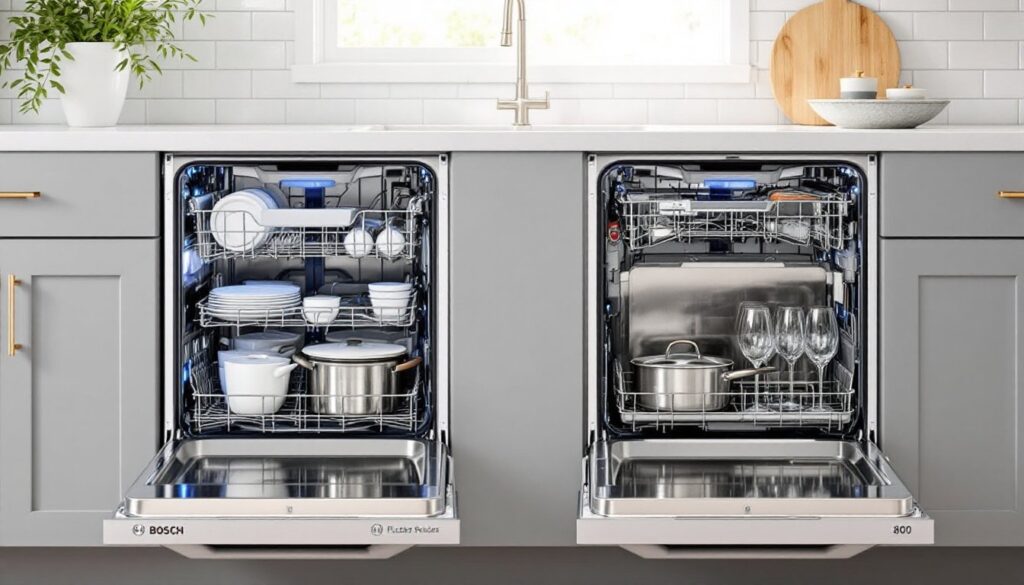
The 800 series drops noise to 40–42 dB, conversation-level quiet, achieved with extra insulation and a more refined motor mount. It adds a third spray arm in the middle rack zone, improving coverage on baking sheets and wide bowls. The MyWay rack (third rack) is 30% larger than the 500’s and fits small bowls or espresso cups. The FlexSpace tines fold down for awkward items like stand mixer bowls. You also get bar handles instead of pocket handles, and some 800 models include AutoAir drying (the door cracks open automatically at cycle end for faster evaporation).
Both series use the same 18-inch-deep cabinet footprint (actual depth varies by handle style, so measure your alcove). Water usage is identical: 2.9 gallons per cycle on Normal mode. Energy consumption is nearly the same, both are Energy Star certified and cost roughly $35–$40/year to operate based on national averages.
The 800 doesn’t clean “better” in the scrubbing sense, it cleans smarter with better spray geometry and more flexible loading. If you run mixed loads (pots, plastics, delicate stemware all at once), the 800’s extra spray arm and rack tweaks pay off. If you pre-rinse and load methodically, the 500 delivers the same end result.
Cleaning Performance: How the Two Series Stack Up
Both series use sensor-based wash logic: turbidity sensors measure water cloudiness and adjust spray time, water temp, and cycle length. On the Normal cycle, expect 2.5–3 hours for a full load. Speed60 finishes in an hour but works best on lightly soiled dishes, don’t expect it to handle dried lasagna.
The 500’s two spray arms (bottom and top) handle everyday loads without issue. Plates, bowls, and glasses come out spotless if you follow Bosch’s loading diagram (don’t block the center tower). The third rack is shallow, utensils only, not ramekins or small prep bowls.
The 800’s third spray arm sits mid-tub, aimed at the middle rack. This matters for sheet pans, large serving platters, and mixing bowls that shadow the upper spray in other machines. Independent testing has shown the 800 series excels with heavily soiled cookware, especially items with baked-on residue. The extra water stream reaches zones the 500 misses when you stack taller items.
Both series struggle with protein-based crusts (egg, cheese, oatmeal) if left to dry overnight. Use the Heavy cycle or add a rinse-aid boost. Bosch’s rinse-aid dispenser is adjustable (1–6 setting): run it at 4 or 5 for plastic-heavy loads to avoid water spots.
Neither series has a built-in food grinder, Bosch uses a fine mesh filter you rinse weekly. This is quieter than grinder-based units but requires you to scrape (not rinse) plates before loading. Forget this step and you’ll find chickpea skins or rice grains in the filter trap.
Bottom line: The 500 cleans well if you load thoughtfully. The 800 forgives messier loading and handles awkward cookware with less Tetris effort.
Noise Levels and Kitchen Comfort
Decibel ratings matter if your dishwasher shares a wall with a bedroom, or if you run cycles during dinner or TV time. Bosch lists ratings at the machine, not at ear level three feet away, so real-world perception is even quieter.
The 500 series at 44 dB is quieter than most conversations. You’ll hear a low hum if the kitchen is silent, but it won’t interrupt a phone call. The motor ramps up briefly during drain cycles: that’s the loudest moment.
The 800 series at 40–42 dB is nearly imperceptible. Bosch achieves this with extra sound-dampening blankets, a vibration-isolated motor, and a sound-reducing base. In open-concept layouts, the difference is noticeable, the 800 lets you run a load while entertaining without anyone asking, “Is the dishwasher on?”
For context, 44 dB is library-level: 40 dB is soft rainfall. Most builder-grade dishwashers run 50–55 dB (moderate rainfall to office conversation). The 4–6 dB drop between the 500 and 800 doesn’t sound dramatic on paper, but decibels are logarithmic, a 6 dB reduction feels like half the volume.
If you have an infant, work night shifts, or live in a loft where the kitchen opens to the living/sleeping area, the 800’s near-silent operation is worth the premium. If your dishwasher is behind a closed door or you run it while you’re out, the 500 is plenty quiet.
Interior Design and Rack Flexibility
Both series offer stainless steel tubs (better heat retention and stain resistance than plastic) and similar 14-place-setting capacity. The differences lie in how you configure space.
Third Rack
The 500’s third rack holds flatware, serving spoons, and spatulas. It’s fixed-height and shallow, no room for small bowls or measuring cups. Tines are narrow, so oversized ladles sometimes wedge awkwardly.
The 800’s MyWay rack is 30% larger and sits on an adjustable rail. Lower it to fit wine glasses below, or raise it to stack deeper items. It accommodates espresso cups, lids, and small prep bowls. If you cook from scratch and generate a pile of measuring spoons, ramekins, and tasting spoons, this upgrade alone justifies the cost difference.
Middle and Lower Racks
Both racks adjust in height (RackMatic system on the 500, 9-position RackMatic on the 800). The 800’s FlexSpace tines fold flat, so you can lay down a 13-inch serving platter or a stand mixer bowl without removing tines. The 500’s tines are rigid: larger items require awkward angling.
The lower rack on both series includes fold-down tine rows for pots and pans. The 800 adds stemware holders on the lower rack (the 500 mounts them on the upper rack only). This matters if you frequently run crystal or thin-rimmed wine glasses, it reduces breakage risk.
Loading Flexibility
If you regularly wash mixing bowls, baking sheets, or serve family-style meals with large platters, the 800’s layout reduces pre-load planning. The 500 works fine for standard dinnerware but punishes you for odd-sized items. For everyday use in a household that relies on efficient kitchen organization, the 800’s flexibility feels like upgrading from a sedan trunk to an SUV cargo bay.
Price Comparison: Is the 800 Series Worth the Extra Investment?
As of early 2026, the 500 series typically retails between $849–$1,099, depending on finish (stainless, panel-ready, or black stainless) and retailer promotions. The 800 series runs $1,249–$1,599. Expect the gap to widen if you choose panel-ready models or upgrade to models with features like Home Connect (Wi-Fi control).
That’s a $350–$500 premium for the 800. Here’s what you’re buying:
- 2–4 dB quieter operation (meaningful in open layouts or near bedrooms)
- Third spray arm for better coverage on cookware
- Larger, adjustable third rack (MyWay) that holds small bowls and cups
- FlexSpace folding tines for awkward items
- AutoAir drying on select models (door pops open for faster dry times)
- Bar handle vs. pocket handle (aesthetics and easier opening with wet hands)
The 800 does not clean dishes “twice as well” or last longer, both series use the same pump, motor, and wash arms and carry the same 1-year parts/labor warranty (with typical 5-year parts coverage on the tub and racks). Reliability data from consumer electronics testing shows no meaningful difference in failure rates between the two lines.
Cost-Per-Year Math
If you keep a dishwasher 10 years (average replacement cycle), the 800’s extra $400 costs $40/year. That’s $3.33/month. If you run 5–7 loads per week and the quieter operation or better rack layout saves frustration even once a week, the amortized cost is negligible.
When to Save with the 500
Choose the 500 if you:
- Pre-rinse or scrape thoroughly (negates the third spray arm benefit)
- Run mostly uniform loads (dinner plates, bowls, glasses)
- Have a closed-off kitchen where noise isn’t an issue
- Prioritize getting below $1,000 all-in with installation
When to Spend on the 800
Pay up for the 800 if you:
- Cook from scratch and generate pots, pans, mixing bowls, and utensils daily
- Live in an open-concept space or near sleeping areas
- Host frequently and need to wash stemware, platters, and serving bowls
- Value loading flexibility over meticulous Tetris-style packing
Installation costs are identical, both use the same rough-in (water, drain, and electric). Expect to pay $100–$200 for install if you’re replacing an existing unit, more if you’re adding new plumbing or electrical.
Which Bosch Dishwasher Is Right for Your Home?
Your decision hinges on how you cook, when you run loads, and what annoys you most about your current setup.
Choose the 500 Series If:
- Your kitchen is closed off or your dishwasher is isolated from living spaces
- You load the same basic dinnerware each cycle (plates, bowls, cups)
- Budget is firm and you want proven Bosch quality under $1,000
- You pre-scrape diligently and don’t mind adjusting tines for odd items
The 500 delivers the core Bosch experience, quiet, efficient, thorough cleaning, without the refinements. It’s the smart pick for a rental property, a basement kitchenette, or a household with predictable dish loads.
Choose the 800 Series If:
- You cook multiple meals daily with varied cookware (sheet pans, mixing bowls, serving dishes)
- Noise matters, open floor plan, thin walls, or you run loads during social hours
- You entertain and wash stemware, platters, or specialty items regularly
- Loading flexibility saves you time and frustration over meticulous packing
The 800’s upgrades are small individually but compound into a smoother daily experience. If your dishwasher runs 6+ times a week and you value “set it and forget it” convenience, the extra cost disappears over the product’s lifespan.
Installation Notes
Both series require a 120V/15A circuit (standard kitchen outlet wiring) and a 3/8-inch compression water supply line. If you’re replacing a non-Bosch unit, check the drain hose routing, Bosch recommends a high loop or air gap to prevent backflow. Some jurisdictions require an air gap by code: verify local plumbing codes before install.
Panel-ready models (both series offer them) accept custom cabinet panels. If you’re doing a full kitchen remodel and want integrated appliances, budget an extra $200–$300 for panels cut to size.
Neither series requires a garbage disposal, but Bosch recommends one to handle the small food particles that pass through the filter. If your sink doesn’t have a disposal, you’ll need to clean the dishwasher filter more frequently, every 3–4 loads instead of weekly.
Conclusion
The Bosch 500 and 800 both deliver reliable, quiet dishwashing rooted in the same core engineering. The 500 handles everyday loads efficiently at a lower price point. The 800 adds refinements, near-silent operation, better spray coverage, and smarter rack design, that justify the premium if your kitchen habits lean toward frequent cooking, entertaining, or open-concept living. Match the series to your actual dish load patterns and noise tolerance, not to feature lists or brand prestige, and either choice will serve you well for a decade or more.