Table of Contents
ToggleA sleeper sofa isn’t just furniture, it’s a tactical solution for anyone who’s ever squeezed an overnight guest into a too-small apartment or wished for a den that could moonlight as a guest room. Ashley Furniture has been manufacturing sleeper sofas for decades, and their current lineup spans everything from compact loveseats with twin mattresses to full-size sectionals with queen-size pull-outs. If you’re weighing whether an Ashley sleeper sofa fits your space and budget, this guide breaks down the mechanics, sizing, fabric durability, and maintenance realities you’ll face after delivery.
Key Takeaways
- Ashley sleeper sofas combine practical guest-sleeping functionality with affordability in the mid-market furniture tier, ranging from $500 for a twin loveseat to $1,800+ for premium queen sectionals.
- Choose between innerspring mattresses for firmer, long-lasting support on heavier guests and gel memory foam for lighter weight and easier operation, each with distinct trade-offs for comfort and durability.
- Measure your room carefully—queen sleepers require at least 8 feet by 7 feet of clear floor space when deployed, and confirm delivery paths to avoid getting stuck in doorways or stairwells.
- Polyester microfiber fabrics resist stains and clean easily for households with kids and pets, while chenille and faux leather require more care but offer different aesthetic and comfort benefits.
- Proper maintenance—including annual lubrication of the sleeper mechanism, monthly vacuuming, and routine spot-cleaning—extends the lifespan of your Ashley sleeper sofa significantly.
- Set realistic expectations: Ashley sleeper sofas work well for occasional overnight guests, but regular weekly use or extended stays may require additional comfort upgrades like mattress toppers.
What Makes Ashley Sleeper Sofas a Popular Choice for Modern Homes?
Ashley Furniture operates one of the largest furniture production networks in North America, which translates to competitive pricing and wide availability. Most metro areas have at least one Ashley HomeStore within a 30-minute drive, and their distribution model keeps lead times shorter than many boutique manufacturers, often two to four weeks instead of eight to twelve.
The company’s sleeper sofa frames typically use kiln-dried engineered hardwood or laminate veneer lumber (LVL) for rails and corner blocks, with sinuous spring systems (also called no-sag springs) for seat support. This isn’t heirloom-grade joinery, but it’s adequate for residential use if the mechanism is operated correctly. Ashley backs most models with a one-year manufacturer’s warranty covering frame defects and mechanism failure.
Their price range runs from around $500 for a basic twin sleeper loveseat to $1,800+ for a queen sleeper sectional in premium upholstery. That bracket puts Ashley squarely in the mid-market tier, more robust than big-box flat-pack imports, but below custom upholstery shops. For renters, first-time homeowners, or anyone who needs a functional guest bed without committing to a dedicated bedroom, the value proposition holds up.
Top Ashley Sleeper Sofa Styles and Collections to Consider
Ashley groups their sleeper sofas into collections that share frame geometry and upholstery options. The Zeb collection features a squared-off silhouette with track arms and comes in full and queen sizes: it’s a workhorse design that fits both contemporary and transitional rooms. The Alenya series uses sloped arms and tufted back cushions for a softer profile, appealing to buyers who want a less boxy look.
For small spaces, the Jarreau collection offers a sofa chaise with a hidden twin or full sleeper tucked under the chaise section, a clever layout if your floor plan can’t accommodate a traditional pull-out. The Darcy line remains one of Ashley’s best-sellers thanks to neutral colorways (stone, sky, cobblestone) and a forgiving poly-blend fabric that handles pets and kids reasonably well.
Many modern furniture layouts prioritize modular configurations, and Ashley’s sectional sleepers deliver on that front. The Megginson and Abinger collections both include left- and right-arm-facing modules, so you can orient the sleeper portion to suit your room’s traffic flow.
Memory Foam vs. Innerspring: Understanding Ashley’s Mattress Options
The mattress inside a sleeper sofa determines whether your guests sleep through the night or wake up with a sore back. Ashley offers two primary types: innerspring and gel memory foam.
Innerspring mattresses use a coil system similar to a traditional bed, typically with a 4-inch to 5-inch profile when fully deployed. They provide firmer support and better airflow, which matters if you live in a humid climate or tend to run the sleeper for extended stays. The trade-off is weight, innerspring mechanisms can exceed 80 pounds, making solo operation difficult for some users.
Gel memory foam mattresses are lighter (often 40-50 pounds) and fold more compactly, which eases the open-and-close cycle. The gel infusion is meant to dissipate body heat, though real-world performance varies. Foam sleepers generally max out at a 4-inch thickness, so side sleepers over 180 pounds may bottom out on the frame bars. If you’re buying primarily for occasional guests who stay one or two nights, foam is adequate. For weekly use or heavier guests, innerspring holds up better over time.
How to Choose the Right Size Ashley Sleeper Sofa for Your Space
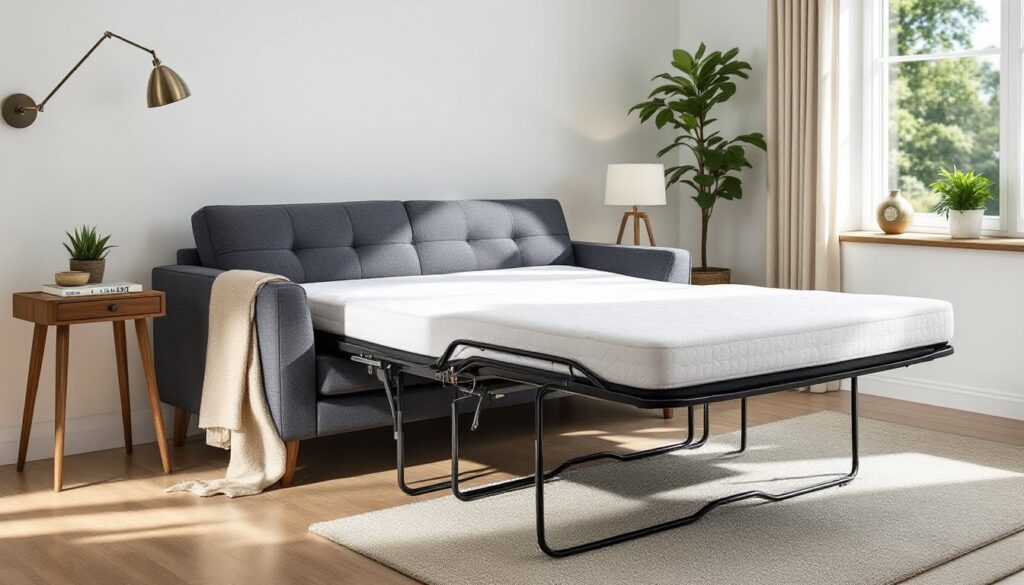
Measure twice, order once. A queen sleeper sofa in the closed position typically runs 84 to 90 inches wide, 36 to 40 inches deep, and 38 to 42 inches tall. When you pull the bed out, add another 60 to 70 inches of floor space in front of the sofa. That means you need a minimum clear zone of roughly 8 feet by 7 feet to operate the mechanism and walk around the deployed bed.
Full-size sleepers are about 10 inches narrower when closed (74-80 inches wide) and extend roughly 54 inches forward when open. Twin sleepers, often sold as loveseats, measure 60 to 65 inches wide closed and extend about 38 inches. If your room is under 12 feet in length, a twin or full sleeper is usually the safer bet.
Don’t forget doorways and stairwells. Ashley sofas ship fully assembled or with minimal assembly (legs and arms), so a queen sleeper can present a 40-inch-wide package that won’t negotiate a standard 32-inch interior door without tilting. Measure your delivery path, including any 90-degree turns, and confirm the sofa’s shipping dimensions with the retailer before you sign the order.
Leave 3 to 6 inches of clearance behind the sofa when placing it against a wall. Many Ashley sleepers use a pull-out mechanism that pivots slightly rearward before extending forward: jamming the frame tight to the wall can bind the track and damage the upholstery.
Fabric and Upholstery Options: Finding the Best Match for Your Lifestyle
Ashley’s standard upholstery lineup includes 100% polyester (often marketed as microfiber or performance fabric), poly-blend chenille, faux leather (polyurethane), and genuine top-grain leather on select premium models. Each has trade-offs.
Polyester microfiber resists staining better than natural fibers and cleans easily with soap and water. It’s the go-to for households with kids, pets, or frequent spills. The downside is pilling, those small fabric balls that form on high-contact areas like armrests and seat cushions after six to twelve months of use. A fabric shaver can remove them, but expect routine maintenance.
Chenille feels softer and has a slight sheen, but it’s more prone to water rings and crushing. If you’re a neat-freak who doesn’t eat on the sofa, chenille works. If you have a Labrador and a toddler, skip it.
Faux leather (PU or bonded leather) wipes clean instantly, which makes it appealing for high-traffic areas. But, it doesn’t breathe, expect sticky skin contact in summer, and it can crack or peel after two to three years, especially along seams and folds where the sleeper mechanism flexes. Real top-grain leather ages more gracefully but costs significantly more and requires conditioning every six months to prevent drying.
Color choice matters for durability perception. Lighter tones (beige, gray, cream) show stains and wear faster but photograph well and suit contemporary design trends. Darker shades (charcoal, navy, chocolate) hide everyday grime but can make a small room feel cramped. If you’re unsure, request fabric swatches and test them at home under your actual lighting before committing.
Installation, Maintenance, and Care Tips for Your Ashley Sleeper Sofa
Most Ashley sleeper sofas arrive with legs detached. You’ll thread four to six legs into pre-drilled inserts on the underside of the frame using the included bolts, usually 5/16-inch hex heads. Keep a ratcheting socket wrench handy: hand-tightening rarely achieves the torque needed to prevent wobble. Once the legs are secure, flip the sofa upright with a helper. These units weigh 150 to 250 pounds fully assembled, so attempting a solo flip risks back strain or damage to the frame.
Before you deploy the bed the first time, remove all seat and back cushions and inspect the mechanism. You should see a pull handle or fabric loop at the front edge of the seat deck. Pull straight out and slightly upward, don’t yank sideways, and the frame will begin to unfold. Some models use a bar-and-latch system that requires you to lift a metal bar before pulling. If resistance is high, check for shipping locks or retaining straps that need removal.
Routine maintenance includes vacuuming the upholstery monthly with an upholstery attachment to remove dust and pet hair. For polyester fabrics, spot-clean spills immediately with a damp microfiber cloth and a drop of dish soap: blot, don’t rub. For tougher stains, a solution of 1 part white vinegar to 2 parts water works on most synthetic fabrics without discoloration. Test any cleaner on an inconspicuous area first.
Lubricate the sleeper mechanism once a year with a silicone-based spray lubricant (not WD-40, which attracts dust). Focus on pivot points, hinge pins, and any metal-on-metal contact areas. This keeps the action smooth and prevents the grinding noise that develops after repeated use.
Rotate the mattress every three months if it’s a reversible innerspring model. Memory foam mattresses are often single-sided, but you can still flip the entire mattress end-to-end to distribute wear. Always fold the bed back into the sofa when not in use: leaving it deployed for weeks at a time strains the leg supports and can bow the frame.
Maximizing Comfort and Functionality in Small Spaces
In a studio apartment or compact den, every square foot counts. Position your Ashley sleeper sofa along the longest wall to preserve open floor area for the pull-out bed. If the room doubles as a workspace, consider a sofa table (also called a console table) behind the sleeper when it’s closed. A table that’s 10 to 12 inches deep and the same width as the sofa provides a surface for lamps, plants, or a laptop without blocking the bed deployment path, just make sure it’s on casters or light enough to slide out of the way when needed.
Use wall-mounted lighting instead of floor lamps to free up floor space. Swing-arm sconces flanking the sofa provide reading light for seated use and ambient light when the bed is open. Aim for fixtures with adjustable heads so guests can direct light without needing a bedside table.
Store bedding in a nearby closet or under-bed storage bins rather than leaving blankets piled on the sofa. Many home design guides recommend vacuum-sealed storage bags for seasonal linens, but those work best for long-term storage: for weekly guest use, a simple lidded canvas bin under a console table or in a hall closet keeps sheets accessible and dust-free.
If your sleeper sofa sees regular overnight use, invest in a mattress topper, a 2-inch memory foam or down-alternative topper transforms a thin sleeper mattress into something approaching a real bed. Toppers fold along with the mattress and add minimal bulk to the mechanism. Look for a topper with corner straps or a fitted skirt to prevent shifting during the night.
Finally, set expectations with guests. Even the best sleeper sofa isn’t a Tempur-Pedic. A well-chosen Ashley sleeper provides a decent night’s sleep for short stays, but if you’re hosting someone for a week or more, you’re better off borrowing an air mattress or setting up a cot in another room. Honesty saves everyone a stiff neck.